
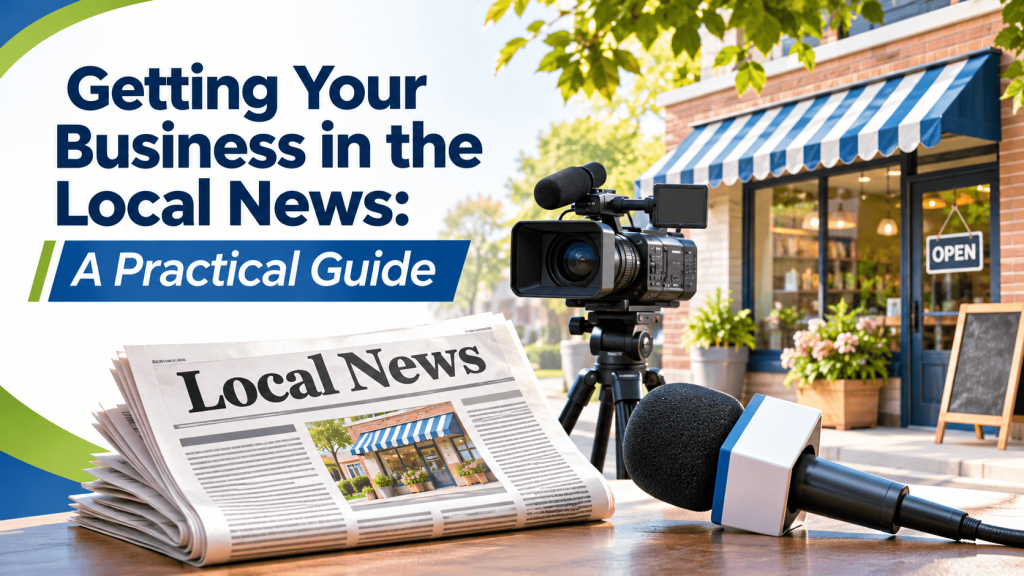
A neighborhood bakery celebrates 25 years in business. A plumbing company launches free water heater checks for seniors. A tech startup hires its fiftieth local employee. These are the kinds of stories local reporters actually cover, yet most businesses never think to share them.
Local media coverage builds awareness, credibility, and often online mentions. You do not need a PR firm to get started.
Find the Genuine Story
Reporters are not interested in advertisements. They want stories that matter to their audience: milestones, community impact, unusual expertise, local hiring, new solutions to local problems, or timely commentary on trends. Ask yourself what about your business would interest someone who will never buy from you.
Expert commentary is often the easiest entry point. A tax preparer can explain new filing changes, and an HVAC company can offer tips before a heat wave.
Timing improves your odds considerably. Pitch seasonal stories a few weeks before the season, tie your expertise to news already being covered, and respond quickly when reporters ask for sources. A local reporter writing about rising energy bills, for example, may welcome a short, practical comment from a local energy auditor.
Pitch the Right Person, Briefly
Read your local outlets and note which reporters cover business, community, or your industry. Send a short, personalized email with a clear subject line, two or three sentences explaining the story, why it matters now, and how to reach you. Offer photos or access to interview subjects.
Local outlets themselves are businesses worth knowing. Browsing the News category on LinkTrendz can help you identify community publications and media outlets you may not have considered.
Make the Most of Coverage
When a story runs, share it on your website and social channels and thank the reporter. Make sure the article lists your business name correctly. If it includes contact details, confirm they match your listings. You can politely ask whether they would include a link to your website, but respect their editorial policies.
Be a reliable source afterward. Responding quickly and accurately makes reporters more likely to call you again.
Conclusion
Local news coverage comes from real stories, clear pitches, and responsive relationships. Look for what makes your business genuinely interesting, pitch it simply, and keep your business details consistent everywhere, including directories like LinkTrendz, so readers who learn about you can find you easily.
Frequently Asked Questions
Do I need a press release to get local coverage?
Not necessarily. A short, personalized email to the right reporter is often more effective than a formal press release. Press releases can help for major announcements, but local reporters usually appreciate a concise pitch that explains why the story matters to their readers.
What if a reporter does not respond?
Reporters receive many pitches and cannot answer all of them. One polite follow-up after several days is reasonable. If there is still no reply, move on and try a different angle or outlet later. Persistence over time matters more than any single pitch.
Can I pay to be featured in local news?
Many outlets offer sponsored content or advertising, which should be clearly labeled as paid. That is different from earned news coverage. Sponsored placements can raise awareness, but readers and search engines treat them differently from independent reporting.
How do I become a go-to expert for local media?
Publish helpful content in your area of expertise, respond quickly when reporters reach out, provide accurate information, and be available on short notice. Let reporters know which topics you can speak about. Over time, reliable sources get called first.