
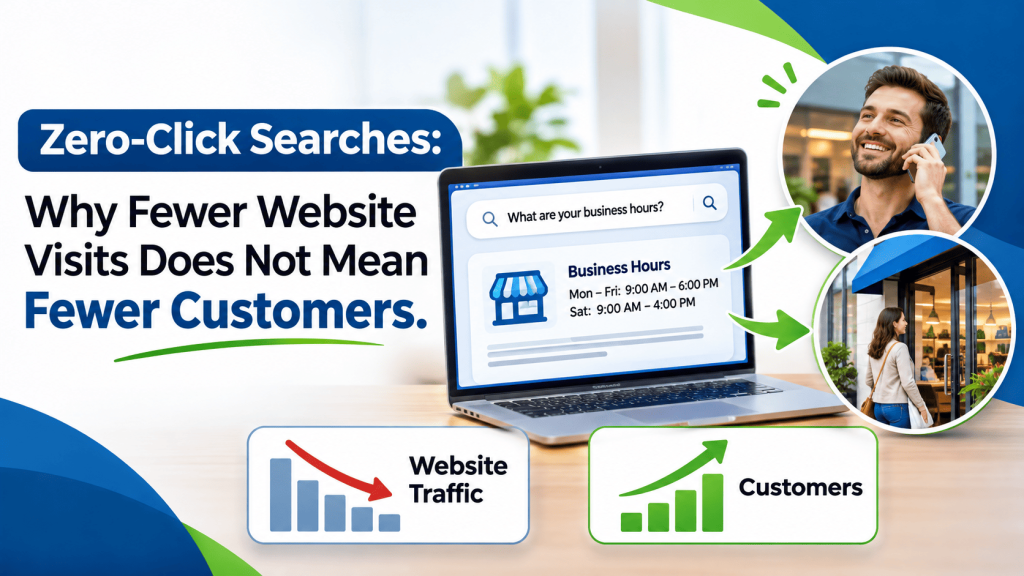
A small business owner notices that website visits have flattened, yet phone calls and walk-ins are steady. What is going on? Increasingly, customers get what they need directly from the search results page: hours, phone number, directions, reviews, or a quick answer. They never visit the website at all.
These are often called zero-click searches. Understanding them changes how you measure your online presence.
Where Customers Get Answers Without Clicking
Business profiles on Google and Apple Maps show hours, phone numbers, and directions. Featured snippets and AI-generated summaries answer questions at the top of results. Knowledge panels display key facts about organizations. For a local customer, a profile panel often contains everything needed to call or visit.
That means the accuracy of your listings may influence customer decisions more than your homepage does.
Consider a customer checking whether a hardware store is open on Sunday. If the profile shows accurate hours, the customer drives over without ever visiting the website. If the hours are wrong, the customer either stays home or arrives to a locked door. Either way, the website never had a chance to help.
Measure Actions, Not Just Visits
Website traffic alone can be misleading. Check your Google Business Profile performance report for calls, direction requests, and website clicks. Ask new customers how they found you. A business with modest website traffic but rising calls is doing well.
IT and computer service providers are often asked by clients about traffic drops. Firms in the Internet and Computer Services category on LinkTrendz can help small businesses set up reporting that tracks real inquiries rather than visits alone.
Adapt Your Strategy
Make sure every profile is complete and accurate, since that information may be all a customer sees. Write clear, factual answers to common questions on your website, which can help search engines understand your expertise. Keep your website focused on what visitors need when they do click: details, trust signals, and easy contact options.
Do not panic over traffic trends without context. Compare them with actual leads and sales.
Conclusion
Zero-click searches mean customers can choose your business without ever loading your site. Keep your profiles and directory listings, including LinkTrendz, accurate and complete, measure real customer actions, and make your website useful for those who do visit. The goal is not clicks; it is customers.
Frequently Asked Questions
What is a zero-click search?
It is a search where the user finds the information they need on the results page itself and does not click through to any website. Examples include checking a store’s hours in a business panel or reading a quick answer at the top of the results.
Are zero-click searches bad for small businesses?
Not necessarily. For local businesses, a customer who calls directly from your profile is still a customer. The challenge is measurement, since website analytics will not capture those actions. Business profile reports and customer surveys fill that gap.
How can I see calls that came from my Business Profile?
Google Business Profile’s performance report shows calls made from the profile, along with direction requests and website clicks. The data may not capture every interaction, but trends over several months can show how customers engage with your listing.
Should I stop investing in my website?
No. Your website remains the place where customers go for details, trust signals, and deeper information. It also supports how search engines understand your business. Zero-click searches simply mean your listings deserve equal attention alongside the website.