
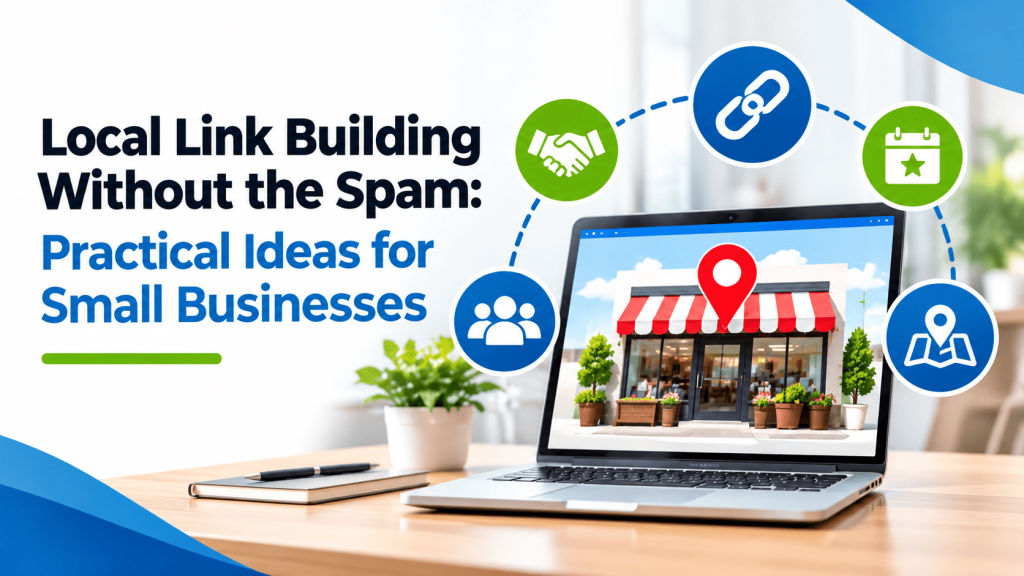
Ask a small business owner about link building and you may hear about cheap packages promising hundreds of backlinks. Those offers usually lead to low-quality links that search engines are designed to ignore, or worse. Real local links come from real relationships.
The good news is that most businesses already have connections that could naturally reference them online.
Start With Relationships You Already Have
Think about the suppliers, manufacturers, and distributors you buy from. Many have “where to buy” or dealer pages. Local business associations, your chamber of commerce, and industry groups often list members. Clients who are businesses may be happy to mention a trusted vendor on a partners page.
Make a list of these organizations and check whether they already mention you. If they do, confirm your name and website are correct.
Local relationships offer more possibilities than most owners expect. A wedding photographer might be featured on a venue’s preferred vendor page. A contractor might be listed by the lumber yard it buys from. A café might appear on a neighborhood association’s guide to local spots. Each mention comes from a real connection, which is exactly what makes it worthwhile.
Create Something Worth Referencing
People link to useful things. A landscaper might publish a planting calendar for the region. A real estate office might maintain a guide to local school enrollment dates. A marketing consultant could share a free checklist for small business owners. Useful resources attract mentions over time without anyone asking.
Marketing firms often help clients plan these assets. Agencies in the Advertising and Marketing category on LinkTrendz can be a starting point if you want help creating resources that local publications and organizations would reasonably cite.
Approaches to Avoid
Google’s spam policies warn against buying links that pass ranking credit, large-scale link exchanges, and automated link schemes. Avoid private blog networks, comment spam, and services promising guaranteed link counts. These tactics can waste money and put your site’s credibility at risk.
When a link is part of a sponsorship or paid placement, it should generally be marked with a sponsored or nofollow attribute.
Conclusion
Local link building is really relationship building. Start with partners and associations, create resources people genuinely want to share, and avoid shortcuts. Reputable directories such as LinkTrendz can also be part of a balanced online presence, helping customers find you while you earn mentions from the community around you.
Frequently Asked Questions
How many backlinks does a local business need?
There is no target number. A handful of relevant, trustworthy links from local and industry sources can be more meaningful than hundreds of unrelated ones. Focus on quality and relevance, and remember that links are only one of many factors in how businesses appear online.
Are directory links considered backlinks?
Some directory listings include links to your website, and some do not. Their value varies widely by directory. Treat directory listings primarily as a way for customers to find and verify your business, with any link benefit as a secondary consideration.
Is it okay to ask a partner to link to my website?
Yes, when the request makes sense for their visitors, such as a supplier’s dealer locator or a nonprofit’s sponsor page. Be polite and specific. Avoid offering payment for links that pass ranking credit, which goes against search engine guidelines.
How long does local link building take?
It is gradual. Relationship-based links and resource mentions accumulate over months and years. That slower pace is a feature, since links earned naturally tend to be more stable and relevant than those obtained through quick schemes.